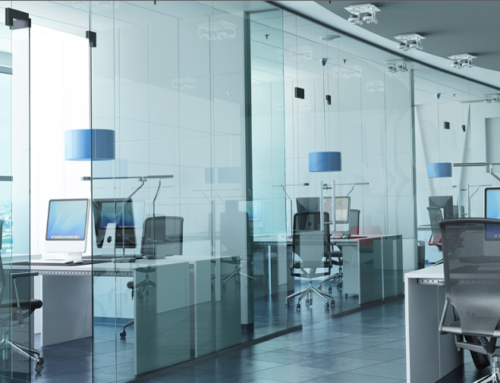
Optimized office lighting design does more than illuminate your workspace. It directly affects your employees’ alertness, comfort, and performance throughout the day. Combining human-centric lighting principles, evidence-based color temperature insights, and layered illumination techniques, you can create a productive work environment that supports focus, reduces fatigue, and improves employee wellbeing.
How Lighting Shapes Productivity and Health
Human-centric lighting designs illumination strategies around people, not just visibility. Great workspace lighting factors in circadian cues that drive sleep-wake cycles and cognitive functions and aligns color temperature with time-of-day and productivity concerns.
Color temperature describes the appearance of light on a scale from 1,000 to 10,000 Kelvin (K). Lower numbers appear yellow or orange, while higher numbers have a blue tone. Blue-enriched light (e.g., 6000K) during the morning and early afternoon can boost alertness by suppressing melatonin, while warmer, low-intensity light (3000K) supports a smoother transition into the evening. Poor timing, especially cool, bright light later in the day, can delay sleep and contribute to next-day fatigue.
Quality of lighting fixtures also affects cognitive load and mood around the office. Flickering lights, excessive contrast, and glare increase visual stress and degrade accuracy on reading, data entry, and inspection tasks. Consistent, comfortable illumination promotes stable concentration, a more positive work environment, and happier employees.
Layered Lighting Strategy
Combining diverse types of lighting with the right distribution for each space balances comfort, flexibility, and efficiency.
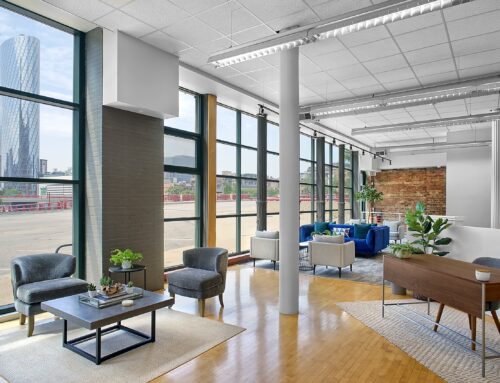
- Natural lighting is provided by the sun through windows and skylights, setting the tone for ambience throughout the workday.
- Ambient lighting illuminates the space for safe movement and general tasks. Evenly distributed ceiling fixtures or continuous overhead rows can provide uniformity.
- Task lighting brightens individual work surfaces for reading, writing, or other detailed work. Adjustable desk lamps help position light away from screens to minimize reflections and allow personal control.
- Accent and decorative lighting add depth, supports wayfinding, and highlights features. Wall washers and spotlights can call attention to signage, architecture, or artwork without driving task performance.
It’s also important to understand the distribution types to fine-tune visual comfort.
- Direct lighting projects downward onto the work plane. It’s useful for efficiency and high illumination but can cause glare if poorly shielded.
- Indirect lighting reflects off the ceiling or upper walls for soft, uniform illumination. This reduces glare and bright spots, making it ideal for open offices and areas with screens.
- Direct-indirect lighting splits output between downlight and uplight, providing uniformity and comfortable brightness. It’s a strong choice for workstations, corridors, and conference rooms.
Layering lighting types and acoustics can reduce eye strain from on-screen glare, large brightness differences in one field of view, and insufficient contrast at the task level. Teams often experience fewer afternoon slumps, better collaboration, and more consistent comfort when glare is controlled and light levels are uniform across shared areas.
Assessing Your Office Lighting Needs
Start by splitting different areas of your workspace into zones with distinct requirements and work backward from there. Consider employee requests, the presence of windows for natural light availability, the location of screens and whiteboards, and the illuminance at the desk level during various times of day.
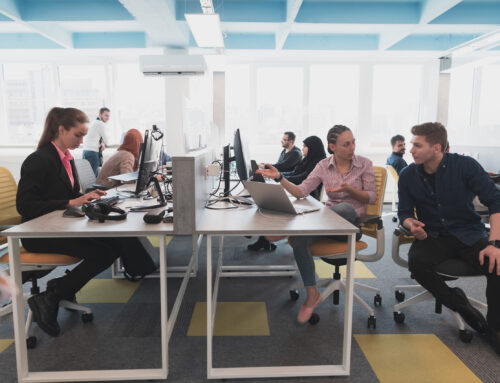
- Heads-down workstations often require consistent ambient light, minimal glare, and supplemental, adjustable lighting.
- Collaborative spaces need flexible, dimmable setups for video calls, screensharing, and more.
- Private offices call for glare-free, quiet lighting suitable for reading and video conferencing.
- Hallways and communal areas must be well-lit for safe navigation and brand expression.
Consider building orientation and daylight availability in your assessment, too. Some offices may have exterior windows while others are windowless, and south- and west-facing windows can produce intense afternoon sun with heat and glare. Employees in these spaces may be more likely to close blinds and require artificial light in the afternoons even if natural light is available.
Best Practices for Productive Workspace Lighting
Open-plan spaces benefit from uniform ambient lighting that utilizes indirect or direct-indirect distributions to soften brightness and enhance vertical illumination. Provide desk-level task lights so employees have personal control without increasing ambient light for everyone.
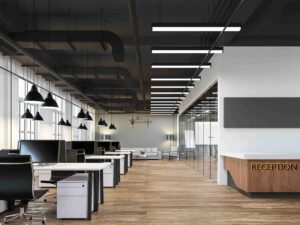
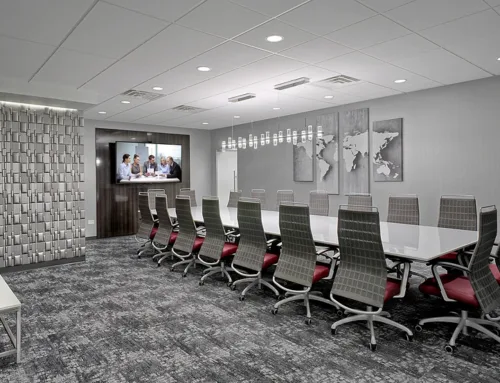
Private offices often combine dimmable overhead features with a task light at the desk. Meeting rooms, too, require a degree of control and customization. Dimmable presets for presentations with indirect uplight and perimeter coves for hybrid meetings make these spaces adaptable for daily tasks.
Utilize high-efficiency LEDs and automated controls where possible to save energy and keep spaces well lit. Teach staff how to use new and updated controls, shades, and scene presets for optimal usage and productive environments, and don’t forget to move sensors with the furniture or update presets during reconfigurations. What good is productive workspace lighting if it can’t be used correctly?
Build a Positive Workspace from the Ceiling Down
When office lighting is curated with layered design, responsive controls, and occupant input, you can create an office space that supports unobstructed vision, steady focus, and healthier routines. The outcome is a more comfortable environment that helps employees do their best work while maximizing productivity and meeting company goals.
If you’re ready to rethink your office space to prioritize employee productivity and wellbeing, contact Key Interiors to get started. We combine standards-based design with years of experience to take your workspace to the next level and help your company meet and exceed its goals.