In commercial interiors, aesthetics and functionality must work hand-in-hand. While finishes, furnishings, and spatial layouts often receive the most attention early in the design process, key mechanical systems such as HVAC have a significant impact on performance, comfort, and long-term operational costs. When an interior designer coordinates with HVAC engineers from the outset, projects move more efficiently and costly redesigns are avoided.
Key Interiors understands the importance of HVAC coordination in interior design to account for your project’s needs. Here are a few key considerations to help guide you through the design process.
HVAC Directly Impacts Layout and Ceiling Design
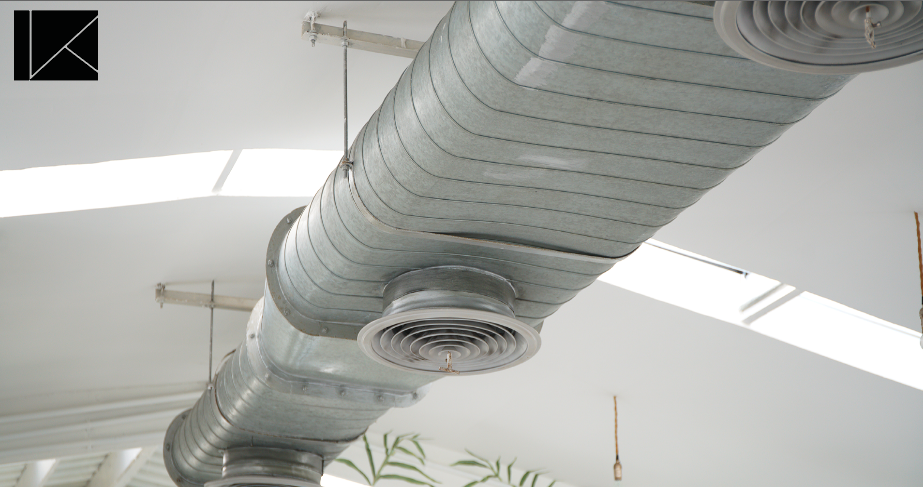
Air distribution systems require ductwork, diffusers, returns, mechanical chases, and access points. These elements typically occupy space above the ceiling plane, but sometimes within walls or millwork. If an interior designer finalizes reflected ceiling plans or lighting layouts before HVAC requirements are fully integrated, conflicts are almost inevitable. It can also be harder to account for energy efficiency in interior design.
Late-stage adjustments may require lowering ceilings, relocating lighting fixtures, resizing soffits, or reworking architectural details. These revisions add cost and can compromise design intent. Coordinating HVAC early ensures that ceiling heights, bulkheads, and architectural features accommodate mechanical systems seamlessly.
Comfort Drives User Experience
Thermal comfort is one of the most influential yet underestimated aspects of interior environments. Drafts, hot and cold spots, humidity imbalances, and poor air circulation negatively affect occupants, whether in offices, life sciences facilities, or other sensitive laboratory environments.
An experienced interior designer understands that furniture placement, partition heights, and space planning directly influence airflow patterns. Early coordination with HVAC engineers allows air supply and return locations to align with occupancy density, equipment loads, and traffic flow. The result is a space that not only looks refined but performs reliably.
Energy Efficiency and Operational Cost
Mechanical systems represent a significant portion of a building’s operational expenses. Decisions made during early design, including zoning strategy, occupancy levels, glazing placement, and equipment heat loads, affect HVAC sizing and performance.
When an interior designer collaborates early with mechanical engineers, the team can optimize layout decisions to ensure energy efficiency in interior design. Avoiding oversized equipment, poorly zoned areas, or reactive system modifications reduces long-term energy consumption and maintenance costs.
Code Compliance and Ventilation Requirements
Commercial projects must meet strict mechanical and ventilation codes. Occupancy type, square footage, and intended use dictate outside air requirements, exhaust specifications, and the required number of air-changes-per-hours. In environments such as healthcare, food manufacturing, or laboratory spaces, these requirements are even more complex.
If HVAC coordination is delayed, code-driven ventilation demands may conflict with the approved layout. This can lead to redesign, delayed permitting, or inspection failures. Early integration ensures compliance requirements are incorporated into the design before documentation is finalized.
Protecting Aesthetics Without Sacrificing Performance
Clients often prioritize clean sightlines, architectural continuity, and minimal visual clutter. However, diffusers, returns, thermostats, and access panels are unavoidable components of HVAC systems.
With early HVAC coordination in interior design, an interior designer can intentionally integrate mechanical elements into the overall aesthetic. Linear diffusers can align with lighting runs. Access panels can be concealed within architectural features. Bulkheads can become purposeful design moments rather than reactive and obtrusive solutions.
The alternative of retrofitting mechanical components into a nearly completed design almost always compromises both appearance and budget.
Streamlining Construction and Reducing Change Orders
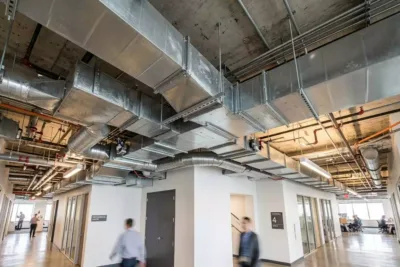 Late mechanical conflicts are one of the most common sources of change orders during construction. When duct routes interfere with structural elements, lighting grids, or millwork, field modifications become necessary.
By coordinating HVAC during schematic design and design development phases, the project team reduces clashes before construction begins. This proactive approach protects schedule integrity and minimizes costly on-site adjustments.
Partnering for Integrated Results
At Key Interiors, we recognize that great interior design extends beyond finishes and furnishings. A successful commercial space requires alignment between architectural vision and building systems. Our approach emphasizes early coordination between the interior designer, mechanical engineers, and construction teams to ensure every system supports the overall design intent.
By integrating HVAC planning at the earliest stages, we help clients avoid redesign, control costs, protect timelines, and deliver environments that are comfortable, compliant, and visually cohesive.
If you are planning a commercial project, partner with Key Interiors to ensure your interior designer collaborates with HVAC and other critical systems from day one. Contact us today to learn more.