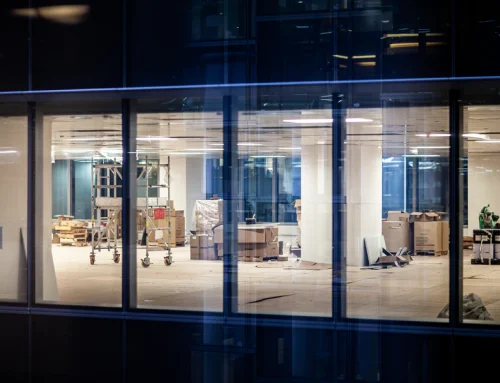
One of the biggest mistakes manufacturers and industrial operators can make is believing the fastest way to unlock growth is to build more space. Though that strategy can solve some problems, a cheaper and more efficient solution is often to use existing space more strategically.
When it comes to upgrading office space, project managers generally have two options: adaptive reuse and refurbishment. Adaptive refuse involves transforming an existing space for a new, different function, like converting on-site offices into production or warehousing areas. Refurbishment focuses on updating, repairing, or refreshing a space for a similar use, like modernizing an office with new finishes, systems, and layouts.
Both options can unlock value, but adaptive reuse changes how the space is used, while refurbishment improves how it performs in its current role.
Employee Relocation As a Solution
When office teams are relocated to an offsite workplace, companies can free up valuable square footage inside the current facility for production, warehousing, or logistics. The result is a practical, lower-cost path to expansion that can improve operational efficiency, reduce disruption, and turn underused office space into a revenue generating solution.
This is a prime example of adaptive reuse, or repurposing office space to align the footprint with current demand. In parallel, the new offsite workplace can benefit from refurbishment upgrades that enhance comfort, technology, and performance without changing the primary office function.
This approach is an attractive option for companies that are currently constrained by their current footprint, facing high construction costs, or struggling to find suitable options for expansion. Instead of pursuing time-consuming additions or relocating, businesses can reallocate onsite office space to support production while moving employees into more suitable office environments with amenities that boost productivity and wellbeing.
Why Adaptive Reuse Makes Business Sense
Reclaiming underused office space inside your building or facility can solve space issues and bring countless benefits for cost-savings, efficiency, and short- and long-term growth. Rather than investing in costly additions or going through the process of building, buying, or leasing a new space, businesses can create usable operational space within their current footprint and delay or avoid major expenses.

Common expansion hurdles like stormwater requirements, zoning variances, and parking limitations can slow growth initiatives, and relocating older machinery and production systems comes with the risk of damaging critical equipment in the move or facing restart problems once everything settles.
Adaptive reuse allows your company to expand manufacturing, storage, or fulfillment functions without interrupting the core workflow already in place. Essential functions can continue as planned while your company increases the return on owned or leased real estate and gets more value from assets you already control.
Off-site Space Supports Company Growth and Employee Wellbeing
Relocating office staff can create more room for production while also improving their day-to-day experience and support your company’s long-term hiring and retention goals. Whether the new space offers some highly requested amenities or a new layout customized to employee work habits, moving employees into a different space has more than a few benefits:
- Separation from industrial environments: Relocating office employees from active manufacturing or warehouse spaces can create a quieter, cleaner, and more focused setting.
- Dedicated, amenitized office space: Offsite offices often offer updated layouts, improved amenities, and a more polished workplace environment that is conducive to professionalism, productivity, and flexibility.
- Updated technology and collaboration infrastructure: Many modern office environments include flexible meeting areas, hoteling workstations, and collaboration zones that make it easier for teams to work efficiently across departments and locations.
- Improved employee experience and retention: A more comfortable and functional office setting can help employees feel supported at work, which can contribute to stronger engagement and lower turnover.
- Stronger appeal for new office talent: A modern office can be a meaningful advantage for companies trying to recruit skilled administrative or professional employees.
- Daily conveniences and commuting options: Depending on the location, a new office space may place employees closer to restaurants, services, and transit routes, improving convenience and making the workplace more attractive for current and prospective employees.
Why Choose a Design-Build Approach
Transforming underused office space into operational capacity can help businesses scale faster, protect productivity, and improve return on existing real estate. But if your company truly wants to make the most of the opportunity, having architects, contractors, and project managers collaborate from day one can streamline projects to ensure you get the most value and return for your space, whether you’re pursuing adaptive reuse, refurbishment, or a combination of both.
If your facility is limiting growth, now may be the right time to evaluate how much hidden value is sitting in underused office areas. With the right strategy and professional team, those spaces can be repositioned to support product expansion, improve employee experience, and generate stronger business performance without the cost and complexity of a full facility expansion.
Key Interiors’ professional team can plan and execute projects with streamlined approvals, minimized waste, and reduced risk of cost overruns. Contact us today to schedule a consultation and discuss the opportunities, concepts, and possibilities in your office space.