As e-commerce demand continues to reshape logistics, many retailers, wholesalers, and third-party logistics providers are facing the same question: should we move, build new, or make better use of the space we already have? In many cases, retrofitting an existing warehouse is the fastest and most cost-effective route to a high-performing fulfillment operation.
A well-planned warehouse retrofit for e-commerce executed with the right design-build partner can transform outdated industrial space into a flexible hub. A new, refined space can support faster picking, smarter storage, safer movement, better employee welfare, and a more professional brand experience.
Why Retrofitting Warehouses Makes Sense for E-Commerce
Unlike traditional pallet-in, pallet-out storage, e-commerce is driven by speed, accuracy, and high order volume. Individual orders, smaller picks, returns processing, and peak-season surges place different demands on a building than conventional warehousing. Retrofitting allows businesses to adapt their current footprint without the disruption, cost, and lead time of starting again elsewhere.
Existing warehouses also often have advantages that are hard to replace: established transport links, proximity to customers, a trained local workforce, and existing operational permissions. The right design and build strategy and expert team can upgrade these assets to support modern fulfillment requirements.
Design Around Product Flow and Storage Needs
An experienced firm will first audit the existing space for suitability. Then, a design and build team can map the physical constraints against the operational goals of the business.
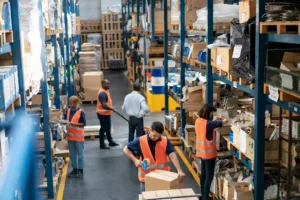
Once needs are determined, layout is next. Goods should move logically from receiving to storage, picking, packaging, quality control, dispatch, and returns. If the flow is interrupted, orders take longer and the chance of errors increases. Retrofitting gives businesses the chance to rezone around real, tested workflows and improve on basic layouts already in place.
A retrofit also allows for additional storage that allows for SKU growth. The right solution depends on the product profile, order patterns, picking method, and building constraints, but maximizes available floor area and vertical space. The goal is not just to store more stock, but to store it in a way that supports faster, safer, and more accurate fulfillment
Consider Automation and Technology
Many e-commerce operations benefit from phased technology upgrades like conveyor systems, barcode scanning, packing automation, pick-to-light technology, autonomous mobile robots, or automated storage and retrieval systems.
Older warehouses may need upgrades before they can support these systems. Floors may need to be leveled or strengthened. Power and data infrastructure may require expansion. Lighting, fire protection, and access routes may need reconfiguration.
By planning technology readiness early, businesses can avoid expensive rework later.
Prioritize Staff Accommodations
E-commerce warehouses often rely on larger teams, shift-based workers, and seasonal labor. Staff facilities like changing rooms, lockers, quiet spaces, and supervisor workstations can all contribute to retention, safety, and operational control.
This is another part of the process where choosing the right partner adds value. The same partner can coordinate warehouse fit-out, office interiors, welfare spaces, furniture, storage systems, and finishes. This creates a fully integrated environment that works for both operations and staff.
Retrofit in Phases to Reduce Downtime
Many warehouse retrofits for e-commerce happen while business is still in full operation. This makes phasing essential. A clear program can separate work into manageable stages, protect critical fulfillment activity, and reduce downtime during peak periods.
Consider temporary routes, stock relocation, contractor access, and commissioning in phasing. Continuously train staff and ensure compliance with standards from the Occupational Safety and Health Administration (OSHA), U.S. Customs and Border Protection (CBP), and more.
Ready to Retrofit Your Warehouse for E-Commerce Growth?
If your existing warehouse is struggling to keep pace with online orders, a retrofit could unlock the capacity and efficiency you need without the cost of a full relocation. Key Interiors’ design-build team can assess your current space, identify improvement opportunities, and deliver a practical plan for transforming your warehouse into an e-commerce-ready fulfillment environment.
Contact our experienced team today to discuss your warehouse retrofit for e-commerce project and discover how your existing space can work harder for your business.