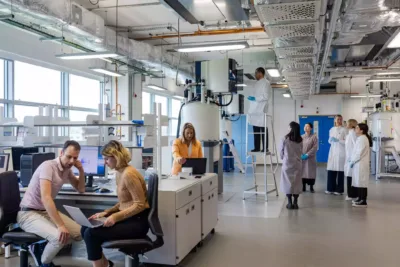
 Life sciences facilities, including laboratories, pharmaceutical manufacturing sites, and biotech production areas, face strict contamination control requirements. Even minor lapses can compromise product integrity, regulatory compliance, and employee safety. Thoughtful facility design is a critical line of defense in mitigating contamination risks and ensuring operational excellence.
As a leading Chicago design firm specializing in contamination control in life sciences facilities, Key Interiors can help your operation mitigate risks while maintaining strict safety and compliance standards. Here’s what you need to know to keep your facility running smoothly.
Prioritize Material Selection
Materials play a pivotal role in contamination control. Non-porous, easy-to-clean surfaces reduce the potential for microbial growth and chemical residues. Flooring, walls, and ceilings should resist staining, abrasion, and frequent sanitization. Hygienic wall panels, seamless flooring, and stainless-steel finishes are commonly used to maintain sterile environments.
Selecting materials that withstand harsh cleaning agents and frequent washdowns reduces maintenance downtime while maintaining compliance with regulatory standards.
Implement Zoning and Controlled Access
Facility layout can dramatically influence contamination risk. Establishing designated zones such as cleanrooms, buffer areas, and gowning spaces helps prevent cross-contamination. Controlled access with proper airlocks, personnel protocols, and clear signage ensures that only authorized individuals enter sensitive areas.
Zoning strategies should consider workflow efficiency as well, minimizing unnecessary movement of personnel, equipment, and materials between clean and less controlled areas. This approach also aids in effective contamination risk assessment.
Optimize Airflow and Ventilation
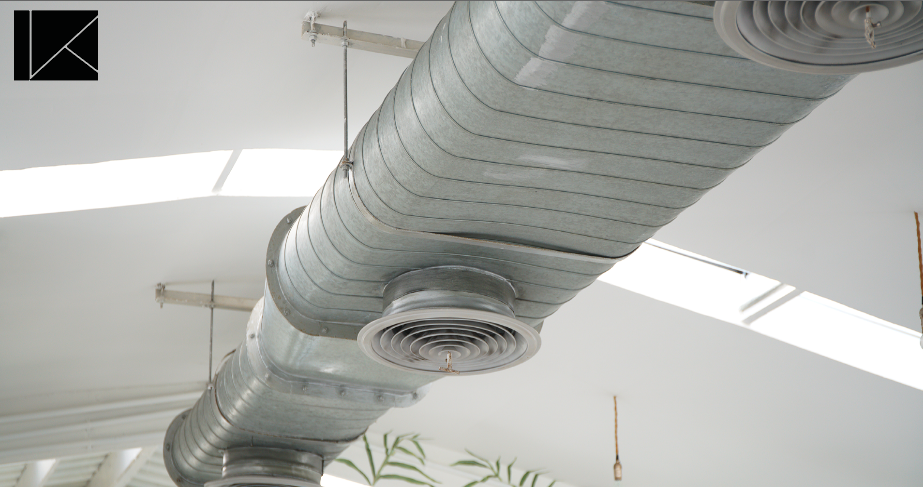
Air quality is a major factor in contamination control. Properly designed HVAC systems, including HEPA filtration and positive or negative pressure differentials, help contain particulates and microbes. Laminar airflow in critical areas minimizes turbulent mixing, reducing the risk of airborne contamination.
Facility design must also consider placement of vents, diffusers, and return air pathways to maintain consistent airflow and pressure differentials throughout controlled zones.
Design for Cleanability
Ease of cleaning is a fundamental design principle. Surfaces should minimize seams, ledges, and crevices where contaminants can accumulate. Furniture, storage, and equipment should be integrated into the design in a way that allows thorough cleaning without disrupting workflow.
Rounded corners, coved baseboards, and elevated equipment platforms are examples of design features that facilitate regular sanitation procedures.
Minimize Human and Material Traffic Crossovers
Personnel and material movement are significant sources of contamination. Designing separate pathways for raw materials, finished products, and staff reduces cross-contact. Strategic placement of gowning areas, airlocks, and transfer hatches helps maintain a controlled environment while supporting operational efficiency.
Integrate Monitoring and Compliance Features
 Modern life sciences facilities often incorporate monitoring systems that track environmental conditions such as temperature, humidity, and particulate counts. Design can facilitate easy installation and maintenance of sensors and monitoring equipment, ensuring continuous compliance with regulatory requirements.
Partner With Experts in Life Sciences Facility Design
Reducing contamination risks requires demands specialized knowledge of life sciences standards, workflows, and regulatory requirements. Working with an experienced design partner ensures that the facility layout, materials, and systems are all aligned to minimize contamination risks.
Key Interiors specializes in designing life sciences facilities that meet rigorous contamination control standards. From material selection and airflow design to zoning and contamination risk assessment, our team ensures your facility operates safely and efficiently.
We specialize in contamination control in life sciences settings. Contact Key Interiors today to discuss how our design solutions can reduce contamination risks while maintaining operational productivity.