Food and beverage facilities operate under strict requirements to protect product integrity, worker safety, and regulatory compliance. A design-build delivery model streamlines these priorities by uniting design, engineering, and construction under one accountable team. With an interior construction company like Key Interiors, owners gain coordinated planning, faster timelines, and tighter cost control while ensuring sanitation, safety, and operational requirements are embedded from the start. Learn more about the design-build construction standards every food & beverage facility must meet, along with practical guidance for designing food environments that pass audits and perform reliably.
Understanding Design-Build in Food & Beverage Construction
 Design-build is a single-contract approach that integrates design and construction, aligning goals and reducing risk. For food and beverage projects, it closes gaps between architectural intent and hygiene-critical details. Benefits include accelerated schedules, clearer budgets, fewer change orders, and more predictable outcomes. Owners have one point of contact responsible for quality and compliance throughout the project, ensuring the design-build construction standards every food & beverage facility must meet are addressed from concept through commissioning.
Collaboration drives success. Design-build improves communication among operations, QA/food safety, maintenance, and finance so decisions on drainage, wall systems, and utility placement support both compliance and operability. Key Interiors makes efforts to resolve conflicts early and keep projects on track, highlighting how high should floor mounted equipment be from the floor and why all flooring in food prep areas must be durable, non-slip, and sealed.
Essential Construction Standards for Food Safety
Food safety standards draw from federal, state, and local codes, including FDA and USDA guidance, HACCP principles, and relevant building, mechanical, and electrical codes. Early alignment with inspectors and plan reviewers helps avoid rework. Documentation such as hazard analyses, sanitation SOPs, and material specifications should inform design from day one, reinforcing the design-build construction standards every food & beverage facility must meet when designing food facilities.
Construction protocols must protect both the build and future operations. Implement controlled access, dust and moisture management, and strict segregation of raw and ready-to-eat areas. Verify utilities at commissioning—potable water quality, compressed air, and ventilation—and conduct pre-occupancy cleaning and swab tests. Key Interiors coordinates vendor compliance, site logistics, and quality checks to ensure the finished space meets audit expectations while designing food processes that maintain hygiene.
Operational Efficiency and Compliance in Facility Design
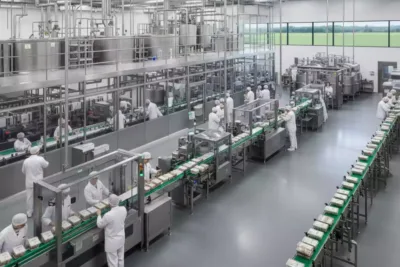
Efficient layouts reduce travel time, prevent cross-contamination, and support labor productivity. Map process flow from receiving to shipping with clear separation of raw, processing, packaging, and finished goods zones. Incorporate line-of-sight supervision, ergonomic workstations, and intuitive wayfinding to maintain throughput while enhancing safety, always referencing the design-build construction standards every food & beverage facility must meet when designing food workflows.
Space planning should account for equipment footprints, service clearances, and future expansion. Provide utilities at the point of use, favor overhead distribution to keep floors clear, and use flexible racking or modular walls to support changeovers. Place dedicated hygiene amenities—handwash stations, boot washes, and gowning rooms—near high-risk areas to sustain sanitation. Specify how high should floor mounted equipment be from the floor for cleanability, and confirm that all flooring in food prep areas must be sealed, non-absorbent, and easy to sanitize.
Compliance with local health, building, fire, and environmental standards is non-negotiable. Coordinate early with authorities having jurisdiction for plan reviews, life-safety systems, and waste management. Implement ventilation and filtration suited to process hazards, and ensure egress, illumination, and signage meet code.
As an experienced interior construction company, Key Interiors’ design-build team manages permits, inspections, and commissioning, delivering facilities that are audit-ready, resilient, and built for efficient operations, aligned with the design-build construction standards every food & beverage facility must meet.
Ready to transform your food & beverage facility? Contact Key Interiors today to start your design-build journey and ensure your project meets the highest standards of safety, efficiency, and compliance.